
When manufacturers move into premium concrete products, the production method matters just as much as the mix design. Products such as kerb units, edging units, paving slabs, tactile plates, drainage channels, paving blocks, and selected architectural elements demand high density, dimensional accuracy, and a consistent surface finish. Wet pressing remains one of the established ways to achieve that level of quality.
However, the term “wet press” is often used too loosely. A properly engineered wet press system is not simply a machine running a wetter concrete mix. It is a complete forming process built around hydraulic compaction, vacuum-assisted dewatering, precision mould engineering, and repeatable process control.
A wet press system forms a carefully dosed, higher-moisture concrete mix or slurry inside a mould using high hydraulic pressure. Typically, the process involves compacting a concrete slurry under hydraulic pressure while a high-vacuum system removes excess water. The aim is to produce dense, accurately formed products with strong edges, good surface finish, and reliable durability.
This is also where wet pressing differs from semi-dry pressing. Semi-dry presses typically compact a lower-moisture mix using vibration combined with hydraulic pressure, while wet pressing relies on pressure-led dewatering and mould precision to achieve product quality. That distinction is important, because the engineering principles behind the two processes are not the same.
Not every machine described in marketing language as a wet press will deliver the same results. Product quality depends on more than press tonnage alone. If mould design, dewatering, pressure control, moisture consistency, and feed uniformity are not properly managed, variation in density, finish, and dimensions becomes much more likely.
In practical terms, a “true” wet press system is one in which all those elements work together as a controlled production method rather than as a loosely configured machine setup. That is what separates a system that produces premium concrete products consistently from one that struggles with rejects, variation, and avoidable downtime.
The first defining principle is hydraulic compaction. In wet pressing, the main densifying force comes from the press itself. High, controlled hydraulic pressure reduces voids, improves density, and supports the strength and durability expected from high-performance concrete products.
Vacuum is not the source of the main compaction force, but it is still a critical part of the process. In a properly engineered wet press system, vacuum helps remove excess water and supports product take-off after pressing. This is one of the reasons wet pressings can achieve a refined surface finish and repeatable geometry when the rest of the process is correctly controlled.
The mould is one of the most important parts of the entire system. CWEM’s mould engineering material makes the point clearly: the mould governs dimensional accuracy, surface quality, compaction consistency, and overall repeatability. Even an advanced machine cannot compensate for poor mould design or poor mould condition.
Well-engineered wet press moulds are designed to withstand repeated high-pressure cycles while maintaining tight tolerances. Features such as perforated plates, filters, spacers, liners, and vacuum pathways all influence product quality. When those details are wrong, the result is often uneven height, weak edge definition, poor dewatering, or higher rejection rates.
Wet pressing depends on stable mix conditions. The concrete must contain enough moisture to fill the mould properly and support dewatering, but not so much that process control is lost. Inconsistent moisture content leads directly to inconsistent compaction, poorer finish, and more variation from product to product.
That is why the moisture profile of the mix should be treated as a controlled process parameter, not just a batching detail. In premium concrete production, stable moisture control is part of stable product quality.
A wet press does not produce consistent results by force alone. Press-cycle consistency matters just as much. CWEM’s recent material highlights the importance of applied pressure, dwell time, vibration intensity where applicable, moisture content, and uniformity of material feed. When these parameters are stable, product quality becomes far more repeatable.
This is a major reason why better wet press systems reduce waste, rework, and variability. A repeatable cycle produces more predictable density, geometry, and finish across the production run.
Modern wet press production increasingly relies on integrated automation. CWEM’s automation material emphasizes in-house control systems and full-plant integration, while its process-consistency material points to automated feed control, moisture control, PLC-based recipe control, and process monitoring as keyways to reduce variability.
Automation does not replace good engineering, but it does make good engineering more repeatable. Better control over batching, feeding, pressing, handling, and monitoring gives manufacturers a more stable process and more reliable quality output.

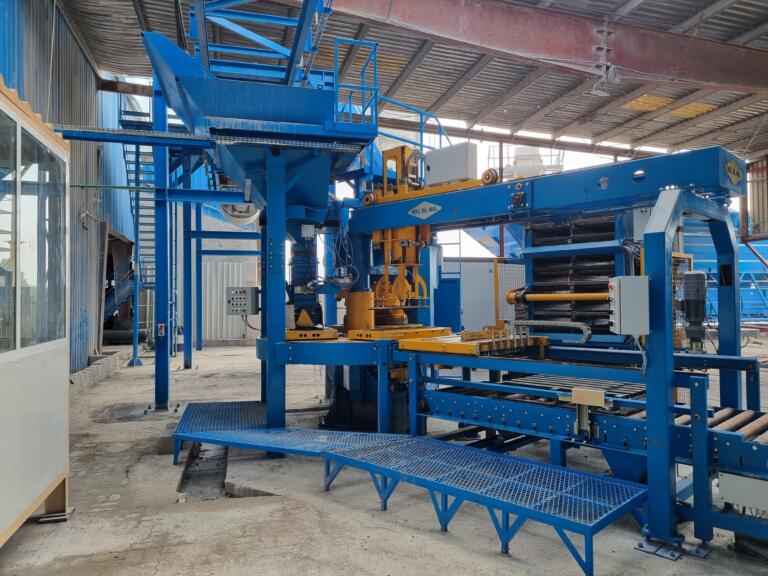
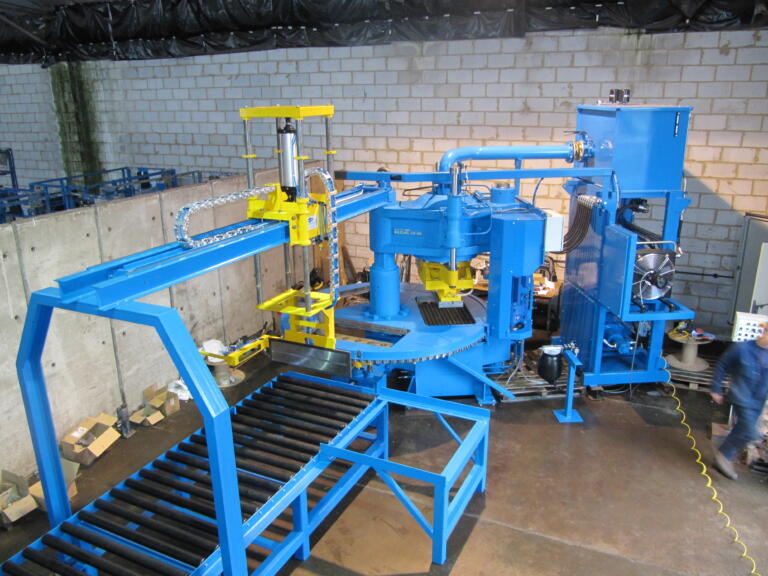
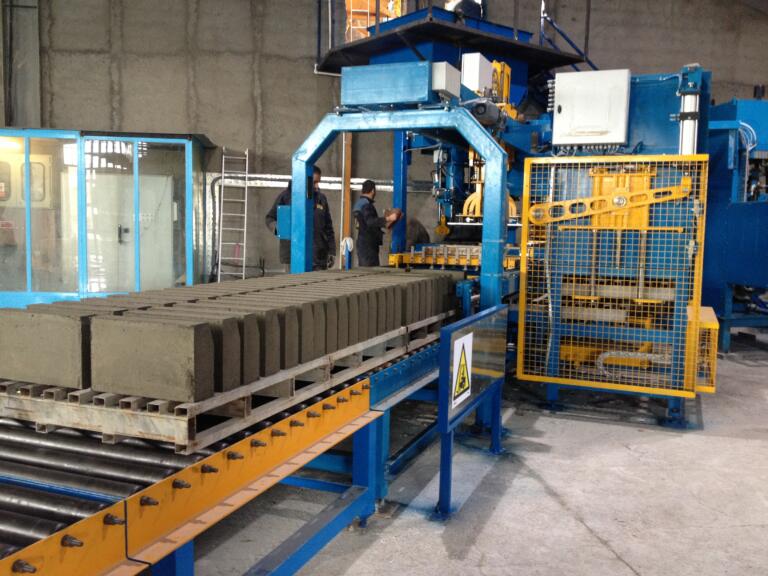
A wet press should never be judged only as a press frame. CWEM’s own material presents wet pressing as a complete production system that includes the press, moulds, vacuum, handling, filtration, controls, and ongoing support. In practice, long-term performance depends on how well those surrounding systems are integrated.
That is especially important for manufacturers who want consistent throughput over time rather than a machine that performs well only under ideal conditions. A durable frame matters, but so do mould lifecycle management, serviceability, spare parts, diagnostics, and process support.
For CWEM, the strongest and most relevant wet-press applications include kerb units, edging units, paving flags and slabs, tactile products, drainage channels, paving blocks, and selected architectural or custom-profile concrete products. These are all product categories where finish quality, dimensional accuracy, density, and repeatability matter commercially.
When evaluating a wet press supplier, manufacturers should look beyond the headline figure for press tonnage. The more useful questions are these:
Those questions matter because wet press performance comes from the total system, not from one component in isolation.
A true wet press system is defined by more than a name. It depends on hydraulic compaction, effective dewatering, precision mould engineering, controlled mix conditions, consistent press-cycle parameters, and integrated automation. When those elements work together, manufacturers are in a much stronger position to produce premium concrete products with the density, finish, and consistency the market expects.
Wet pressing uses a higher-moisture mix or slurry and relies on hydraulic compaction with vacuum-assisted removal of excess water. Semi-dry pressing typically uses a lower moisture mix compacted by vibration combined with hydraulic pressure.
No. The main compaction force comes from hydraulic pressure. Vacuum supports the process by helping remove excess water and assisting with product take-off.
Because the mould directly affects geometry, surface quality, dewatering behaviour, consistency, and rejection rates. Even a powerful press will not perform well with poor tooling.
Applied pressure, dwell time, vibration intensity where applicable, moisture content, and uniformity of material feed are all key parameters in consistent wet press production.
Typical wet-press products include kerb units, edging units, paving slabs, tactile plates, drainage channels, paving blocks, and selected custom-profile or architectural products.
They should evaluate mould engineering, dewatering design, automation and controls, surrounding plant equipment, and the supplier’s ability to support the full system over its lifecycle.
Want to Transform your Concrete production needs ?

Columbia Wil El Mil Engineering Ltd
7 Ashville Road, Gloucester
GL2 5EU, England
Tel: +44 (0)1452 525259
Email-Id: [email protected]
©2025, Columbia Wil El Mil. All Rights Reserved by Columbia.