
The global construction sector is undergoing a significant shift as governments, investors, and clients demand lower carbon and more resource efficient building materials. Concrete producers are now operating in an environment shaped by stricter environmental regulation, sustainability certification requirements, and rising ESG expectations.
Manufacturers face increasing pressure from carbon reduction mandates, water use regulation, and lifecycle based product assessment requirements to demonstrate that their production methods align with evolving sustainability standards. As a result, manufacturing technologies that improve efficiency, reduce emissions, and lower resource consumption are becoming increasingly important.
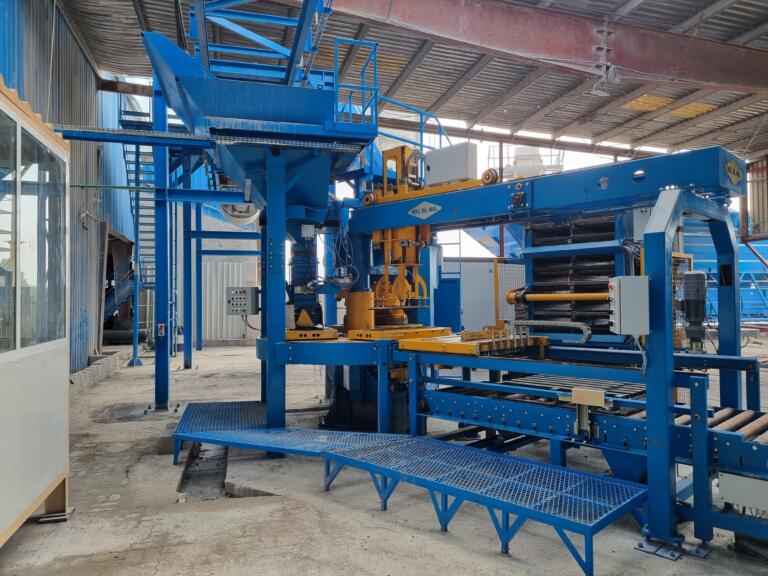
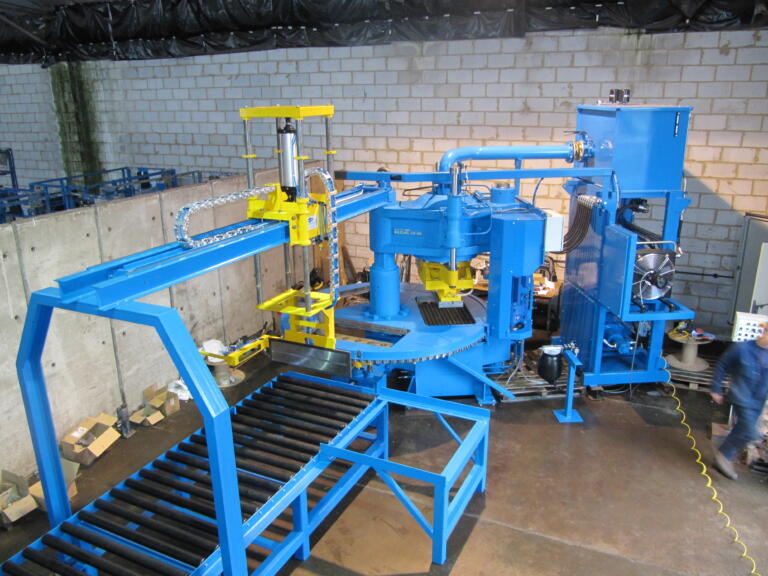
This article examines how wet pressing technology, particularly advanced systems such as wet press concrete machines and single station hydraulic wet press systems, can support concrete producers in meeting modern sustainability requirements.
The analysis considers the impact of wet pressing on water usage, material efficiency, energy consumption, durability, and embodied carbon, demonstrating how the technology supports regulatory compliance while also delivering long term economic value.
Wet pressing is a concrete manufacturing process in which a relatively high moisture concrete mix is compacted within a mould using high hydraulic pressure. Unlike vibration based or dry pressing methods, wet pressing relies on controlled hydraulic compaction to achieve high density, dimensional accuracy, and surface quality.
Hydraulic force replaces excessive vibration, resulting in uniform compaction, reduced air voids, and consistent product geometry. Modern automated single station wet press systems allow manufacturers to produce high quality concrete components with minimal material waste.
Wet press systems are commonly used for architectural concrete blocks and facade components, paving stones and slabs, and high density precast elements that require tight dimensional tolerances and high surface quality.
Single station wet press machines are particularly well suited to applications that demand strength, finish quality, and improved sustainability performance.
Concrete manufacturers must at present adhere with a wide range of developing environmental laws and regulations, involving:
These guidelines progressively consider not just operational emissions but also embodied carbon throughout the product’s lifecycle.
Beyond regulatory compliance, market driven sustainability frameworks such as LEED, Envision, and similar green building standards reward manufacturers who reduce embodied carbon, improve material efficiency, and deliver durable long lasting products.
At the same time, architects, developers, and infrastructure owners increasingly seek suppliers that can demonstrate verified sustainability performance rather than aspirational claims.
Wet pressing enables controlled and efficient water usage compared to traditional compaction and curing methods. Moisture is optimised for pressing rather than vibration, reducing excess water demand. Wet press production lines are also well suited to closed loop water recycling systems, which support compliance with water efficiency regulation.

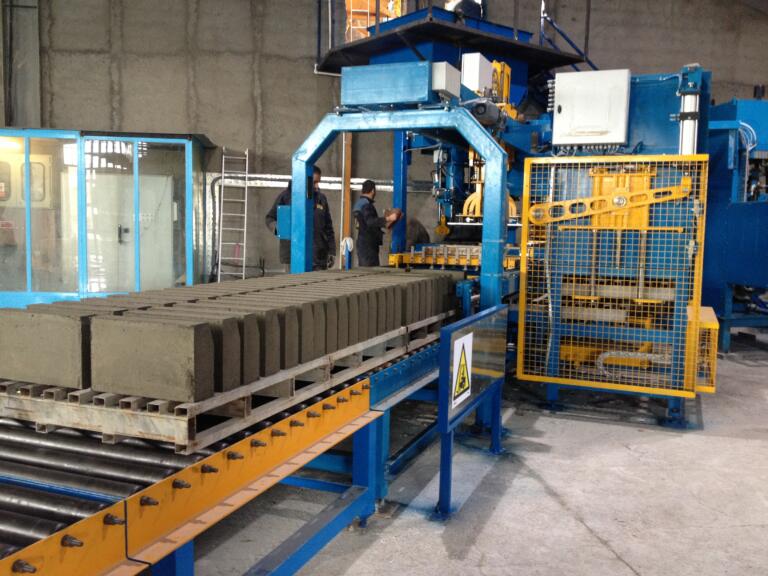
High accuracy wet press machines provide precise shaping and uniform compaction, significantly reducing breakage, rejects, and rework. This precision lowers overall cement and aggregate consumption and supports waste reduction objectives.
Wet pressed concrete products exhibit high density, improved abrasion resistance, and strong freeze thaw performance. Increased durability reduces replacement frequency over the service life of the product, lowering lifecycle emissions and resource demand.
Wet press systems are compatible with recycled aggregates and supplementary cementitious materials such as fly ash or slag. This flexibility supports circular economy objectives by reducing reliance on virgin raw materials while maintaining performance.
Because wet pressing achieves high density during forming, curing times can often be reduced. Automated single station wet press systems also enable optimised production workflows that lower overall plant energy consumption compared to vibration intensive processes.
Wet pressing contributes directly to lower embodied carbon by reducing cement content, minimising waste, and producing durable products with extended service life. High performance densification enables required strength levels to be achieved with less material input.
Concrete producers using wet press technology can track sustainability performance using metrics such as water use intensity per unit produced, material waste and reject rates, energy consumption per product, and lifecycle carbon impact.
These metrics are increasingly required for sustainability certification, regulatory reporting, and client disclosure.
Compared with traditional vibration based production, wet press systems typically deliver higher production efficiency, reduced emissions and material waste, and longer product lifespan. These advantages explain the growing adoption of wet press technology in sustainable precast manufacturing.
While wet pressing offers clear sustainability benefits, producers must consider factors such as upfront capital investment, training and process optimisation requirements, and mix design adaptation to ensure material compatibility.
In most cases, these challenges are offset by long term operational, economic, and sustainability gains
Wet press technology is expected to play an increasingly important role in low carbon construction. Integration with automation, digital manufacturing, and data driven quality control will further enhance efficiency. Continued development in mix design and recycled content will strengthen its contribution to sustainable concrete production.
Wet pressing provides concrete producers with a practical pathway to meet modern sustainability standards. By reducing water and energy consumption, minimising material waste, enhancing durability, and lowering embodied carbon, wet press technology delivers both environmental and commercial value.
As regulatory requirements tighten and ESG expectations rise, investment in advanced wet press systems represents a strategic approach to building more sustainable and resilient production operations.
Wet pressing reduces cement usage by achieving required strength and density through hydraulic compaction rather than increased binder content.
Wet press technology improves resource efficiency by lowering water consumption, reducing raw material waste, minimising rejects, and improving energy efficiency.
Lower cement usage, reduced energy demand, and extended product life all contribute to reduced carbon emissions.
High pressure compaction and precision forming reduce breakage and waste while improving product strength.
High density compaction improves durability and reduces the need for replacement, lowering lifecycle emissions.
Closed loop water recycling systems can be integrated into wet press production lines to support water efficiency compliance.
Wet press products generally offer improved durability and resistance to wear and environmental exposure compared to traditional products.
Wet pressing supports regulatory compliance by enabling transparent tracking of sustainability metrics and reducing environmental impact.
Wet press systems are compatible with recycled aggregates and supplementary cementitious materials.
Long term benefits include lower operating costs, improved regulatory compliance, reduced carbon footprint, and stronger market positioning.
Want to Transform your Concrete production needs ?

Columbia Wil El Mil Engineering Ltd
7 Ashville Road, Gloucester
GL2 5EU, England
Tel: +44 (0)1452 525259
Email-Id: [email protected]
©2025, Columbia Wil El Mil. All Rights Reserved by Columbia.