The Lifecycle cost advantage of wet press products compared to other products
Introduction
Background
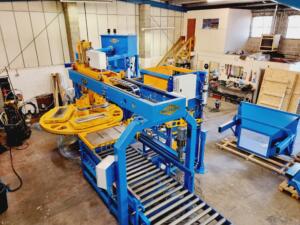
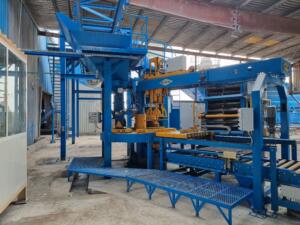
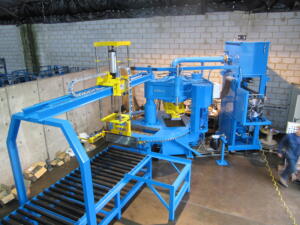
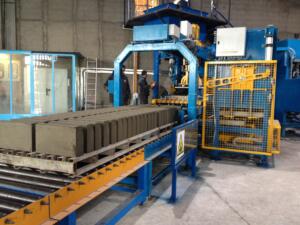
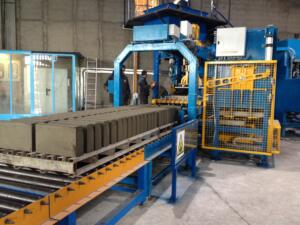
Long lasting precast components including kerbstones drainage elements slabs protective covers and wet press concrete blocks are widely used in industrial pipeline networks utility corridors transportation infrastructure and heavy-duty concrete systems. These components are increasingly manufactured using advanced wet press technology such as single station wet press machines where controlled dosing and high compaction forces produce consistent high performance concrete elements.
Concrete manufacturers typically employ one of several production processes including wet press systems cast or moulded concrete semi dry vibratory compaction and fabricated alternatives such as GRC polymer composites or cementitious boards.
Each production method results in concrete with different mechanical properties, surface quality dimensional accuracy, and long-term durability.
Purpose of the Analysis
From an engineering perspective, lifecycle cost represents the total cost of a product across its entire service life including production, installation, maintenance, operational performance and eventual replacement.
This analysis explains why wet press products manufactured using single station hydraulic wet press systems or automated wet press machines deliver superior lifecycle economics compared with alternative forming methods.
Overview of Wet Press Technology
Wet pressing is a high-pressure compaction process in which a wet concrete mix is densified using substantial hydraulic force typically in the region of 400 to 600 tons. The process produces a dense, low porosity concrete structure with highly repeatable geometry.
In many production environments this process is carried out using a single station wet press machine which allows precise control of dosing compaction dewatering and dimensional accuracy within a compact production footprint.
The production sequence consists of automated volumetric dosing of concrete into the mould hydraulic compaction through the press ram expulsion of excess water through filter plates assisted by vacuum systems ejection using vacuum lifting and ejector tables and subsequent natural curing with retained internal moisture to support full hydration.
This process produces concrete with higher density, lower void content, and superior uniformity compared to vibratory or low-pressure casting methods.
Materials Used in Wet Press Products
Wet press concrete products typically use standard coarse and fine aggregates cement with an approximate aggregate to cement ratio of eight to one optional pigment and supplementary cement materials such as PFA.
Chemical admixtures are generally unnecessary as densification is achieved mechanically rather than chemically.
Key Product Characteristics Enabled by Wet Pressing.
Strength and Density
Wet pressed concrete exhibits a highly dense matrix with a void ratio approximately one third that of semi dry vibratory concrete resulting in significantly higher compressive and flexural strength.
Dimensional Stability
Precise ram alignment-controlled mould positioning and accurate dosing enable tight dimensional tolerances required for kerbs channels and interlocking slab geometries.
Surface Finish and Precision
High pressure compaction against smooth filter plates produces consistent defect free surfaces without blowholes voids or honeycombing making wet pressing suitable for precision precast applications.
Comparison of Manufacturing Methods
Wet Press Compared with Semi Dry Production
Semi dry forming relies on vibration to compact a low moisture mix which results in reduced density higher water absorption increased dimensional variation, higher mould wear noise and stricter curing control.
Wet pressing achieves uniform densification, improved mechanical performance, reduced mold wear, and longer product life.
Wet Press Compared with Cast Concrete
Wet pressing allows equivalent strength to be achieved with lower cement content, enables immediate demoulding reduces labour requirements and shortens production cycles.
Cast concrete requires manual mould filling longer curing periods, higher cement content and increased labour input to achieve comparable performance.
Wet Press Compared with Fabricated Alternatives
Fabricated materials such as GRC polymers or composites may suit lightweight applications but generally offer lower abrasion resistance reduced impact performance dimensional instability under temperature variation and increased risk of joint or fastener failure.
Wet pressed concrete remains the preferred solution where mechanical durability and dimensional consistency are critical.
Lifecycle Advantages of Wet Press Products
Extended Service Life
Wet pressed concrete typically achieves very low water absorption values in the region of zero-point three percent, which provides strong resistance to freeze thaw exposure to sulfate attack, abrasion, impact damage, and long-term deformation.
Reduced Maintenance Requriements
High density microstructure and precise geometry reduce kerb misalignment, edge damage surface wear and slab movement resulting in fewer repairs and lower long term maintenance costs.
Improved Operational Perfomance
In pipeline systems protective covers and utility corridors consistent geometry improves installation accuracy reduced moisture ingress protects embedded services and stable long-term shape prevents insulation gaps and thermal losses.
Reduced Installation Waste
Tight dimensional tolerances result in reduced trimming minimal breakage faster alignment and lower onsite waste which reduces labour time and installation costs.
Risks and Limitations
Highly customised low volume products may not justify mould investment specialised tooling can involve higher initial cost and lead times may be longer due to mould fabrication and precision hydraulic systems.
These factors primarily affect niche applications rather than standard kerbs, channels, slabs, or covers.
Wet press technology offers sustainability benefits including reduced cement usage extended product life lower replacement frequency recycling of expelled water compatibility with supplementary cementitious materials and lower embodied carbon per unit of performance.
Conclusion:
Wet press technology delivers measurable lifecycle cost advantages including extended service life reduced maintenance, reduced installation waste improved structural and dimensional performance, and lower environmental impact over the product lifespan.
Strategic Recommendation
For engineers and production managers focused on durability reliability and lifecycle cost-effectiveness, wet press manufacturing using automated or single station wet press systems represents the most technically and economically sound solution.
Future Outlook
Ongoing developments in robotic handling automated dosing advanced hydraulic control and modular mould systems will continue to strengthen wet pressing as the preferred production method for high performance precast concrete.
FAQ's
What are wet press products?
Wet press products are high density precast concrete components manufactured by hydraulically compacting a wet concrete mix into a dense uniform structure.
Why do wet press products have a lifecycle cost advantage?
Wet press products deliver lifecycle cost advantages through extended service life, reduced maintenance, and sustained dimensional accuracy.
How do wet-press products compare to dry-formed materials?
Compared with dry formed products, wet pressed concrete offers higher density lower water absorption and improved long-term stability.
How does wet press manufacturing reduce waste?
Waste is reduced through accurate dosing, immediate demoulding lower reject rates, and minimal onsite trimming.
Do wet-press products last longer than alternatives?
Wet press products typically last longer than alternatives due to low porosity and resistance to wear and weathering.
Are wet-press products more environmentally sustainable?
Wet press products support sustainability goals through lower cement usage, longer service life, and compatibility with recycled materials.
In what applications do wet press products offer the greatest advantage?
Applications that benefit most include kerbs, channels, slabs, cable covers, and other products requiring strength and dimensional accuracy.
Can wet-press products reduce energy or operational costs?
Operational costs are reduced through improved sealing, reduced moisture ingress, and improved thermal performance.
Are there situations where wet-press products are not ideal?
Extremely lightweight or low volume specialised products may be better suited to alternative manufacturing methods.
How can I calculate the life cycle cost benefit?
Lifecycle cost evaluation should consider production cost service life maintenance frequency replacement intervals and operational impact.