
Wet press technology is widely used to manufacture high density concrete products such as pavers, kerbstones, blocks, slabs, tiles, and protective covers. In this process, fresh concrete is compacted under very high hydraulic pressure using a wet press concrete machine to achieve high density, dimensional accuracy, and surface quality. This method is commonly applied in plants operating wet press machines for concrete products or single station hydraulic wet press systems.
Despite the inherent strength of wet press technology, quality issues can still develop after pressing. One of the most common and costly issues is the formation of microcracks. These defects typically appear while the concrete is still green, during demoulding, handling, stacking, transport, or early curing.
Reducing micro cracks is essential, as their presence directly affects strength, appearance, rejection rates, long term durability, and overall lifecycle performance.
Micro cracks are small internal cracks that develop within wet pressed concrete products. Unlike visible cracks, micro cracks are often not immediately apparent after production. Over time, however, they can propagate due to moisture ingress, applied loads, or thermal cycling.
In wet press production, microcracks most commonly form after pressing, during demoulding, handling, stacking, and early curing, when the concrete remains green and vulnerable.
Although small, micro cracks can lead to reduced flexural and compressive strength, increased long term water absorption, accelerated surface wear, and higher rejection rates and customer complaints.
Visible cracks are surface breaking and easily detected during inspection. Micro cracks are internal, subtle, and often only become evident after time in service.
Micro cracks are typically caused by handling related stresses, including inappropriate manual lifting, shifting, and stacking, uneven force during demolding; sudden jolts or vibration, incorrect conveyor speed or misalignment, fluctuating curing conditions caused by rough transport, and human error during material transfer.
These risks are significantly higher in plants that rely heavily on manual handling rather than automated systems.
Smart handling refers to automated and intelligent material handling systems designed to transport green wet press products safely and consistently through the production line.
In modern wet press facilities, smart handling systems typically include robotics and automated palletisers, servo-controlled conveyors, soft grip vacuum or mechanical grippers, sensors and alignment systems, and data driven control logic. The objective is consistent, gentle, and continuous movement that minimises stress on green concrete products.
Smart handling systems ensure controlled speed, smooth acceleration and deceleration, vibration free transport, and elimination of sudden impacts. This prevents internal stress accumulation immediately after pressing.
Automated demoulding systems apply uniform lifting forces, enable smooth and controlled release from the mould, and minimise bending or twisting stresses. This is particularly important for high pressure wet press products, which are strong but still delicate when green.
Automated stacking systems ensure precise placement of each product, even distribution of load, and protection of edges and corners. This significantly reduces the likelihood of crack formation and breakage.

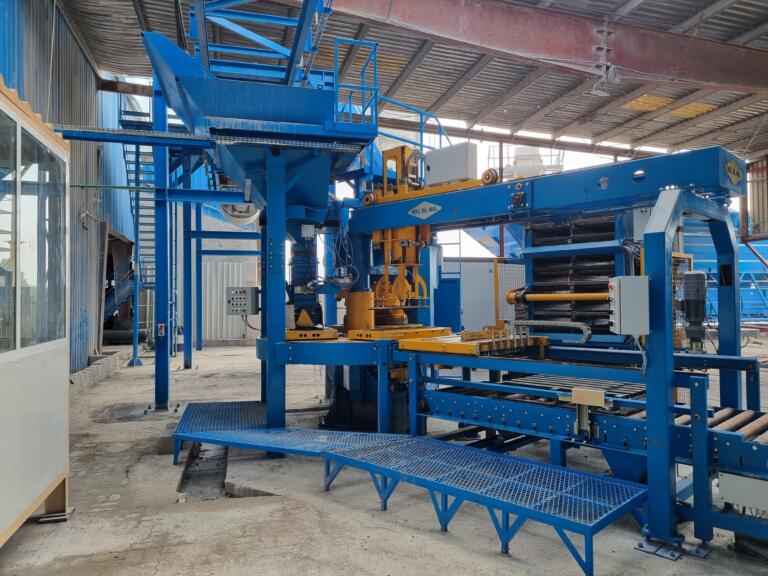
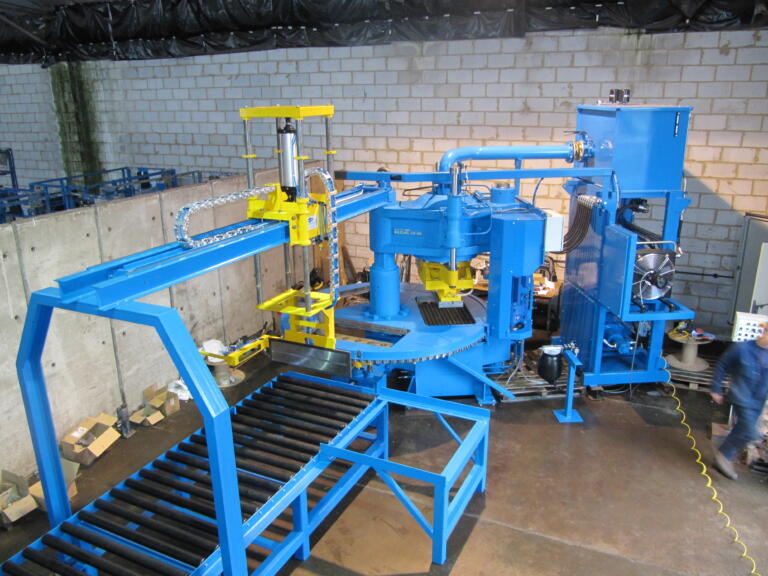
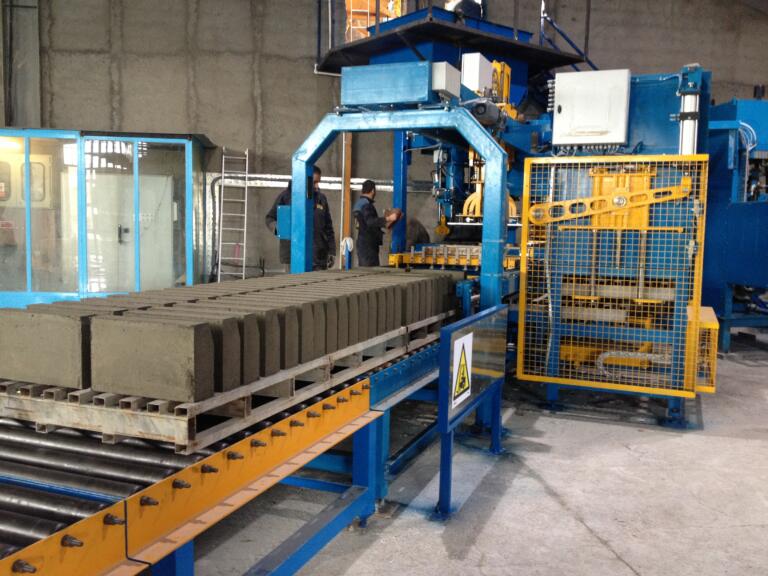
Sensors provide real time feedback on product position and stability, enabling automatic adjustment of conveyor speed and gripping force. This prevents stress caused by misalignment or unstable handling.
Automation reduces the risk of accidental drops, uneven lifting forces, and inconsistent handling between shifts. This leads to more consistent quality in plants operating automated single station wet press systems.
Common smart handling technologies include robotic pick and place systems, servo controlled conveyors, automated palletisers and depalletisers, mechanical or soft grip vacuum grippers, vision based alignment systems, and data driven quality monitoring.
These technologies improve overall plant reliability and support high accuracy wet press installations.
Implementing smart handling systems in wet press plants results in reduced micro crack formation and waste, improved product consistency and surface quality, enhanced long term strength and durability, increased throughput and efficiency, reduced rework and rejection costs, and improved operator safety.
Over time, these benefits translate directly into lower lifecycle production costs.
Plants that have introduced automated demoulding, servo controlled conveyors, and robotic stacking consistently report a significant reduction in micro crack related rejects, alongside improved consistency and safer operation. Actual results vary depending on product type and plant layout.
Micro cracks in wet press products primarily form after pressing, during handling and early curing. Smart handling systems reduce these defects by ensuring that product movement is controlled, gentle, and consistent throughout the manufacturing process.
Ongoing developments such as intelligent handling optimisation, predictive maintenance, and real time quality analytics will further strengthen the role of smart handling in high performance wet press production.
Micro cracks are small internal cracks that develop during handling or early curing of wet press products.
Micro cracks occur due to improper handling, sudden impacts, vibration, or uneven demoulding forces.
Smart handling prevents micro cracks by providing gentle, controlled, and repeatable product movement.
Smart handling systems include robotics, conveyors, sensors, alignment systems, and data driven controls.
Automated demoulding improves quality by applying evenly distributed release forces.
Automation reduces damage by eliminating manual lifting and inconsistent handling.
Automated alignment improves stacking accuracy and protects edges and corners.
Reducing micro cracks improves durability and extends service life.
Although initial costs vary, smart handling is cost effective due to reduced waste and improved product quality.
Want to Transform your Concrete production needs ?

Columbia Wil El Mil Engineering Ltd
7 Ashville Road, Gloucester
GL2 5EU, England
Tel: +44 (0)1452 525259
Email-Id: [email protected]
©2025, Columbia Wil El Mil. All Rights Reserved by Columbia.