
Present-day manufacturers increasingly rely on wet press technology to achieve the high standards expected in concrete product manufacture. This includes the use of advanced wet press machines and complete wet press systems for concrete to produce dense, durable, and visually consistent products. The production process involves a wet press concrete machine, including configurations commonly referred to in paving applications as a wet press paver machine.
Beyond machine capability and mix design, however, precision timing plays a critical role in overall process performance. Each production stage must be properly synchronised to ensure accurate forming, uniform compaction, effective dewatering, and reliable product handling. Even small variations in cycle timing can lead to reduced strength, visible defects, lower dimensional consistency, and variable product quality.
This blog covers the following:
A wet press concrete machine forms a relatively high moisture concrete mix within a mould using controlled hydraulic pressure, often supported by vacuum assisted dewatering. This process enables the production of high quality, dense concrete products with improved surface finish, dimensional accuracy, and durability.
In wet press production, the typical stages include:
Modern industrial wet press machines integrate these stages into a controlled production cycle to deliver repeatable quality across production batches.
In wet press systems for concrete, precision timing means ensuring that every stage of the process takes place in the correct sequence and for the correct duration. In automated production environments, functions such as material feeding, mould filling, pressing, dewatering, and product release must all occur within clearly controlled time intervals.
Whether applied within a standalone wet press concrete paver machine or a fully integrated production line, timing directly affects compaction quality, product density, surface finish, and cycle stability. Poor synchronisation can lead to inconsistent results, product defects, unnecessary mechanical stress, and reduced production efficiency.
The mixing stage must run for long enough to distribute materials evenly and achieve a consistent moisture profile throughout the batch. Moisture control is especially important, as variation at this stage directly affects the behaviour of the concrete in any concrete wet press machine.
If the material is not mixed consistently, downstream timing control becomes less effective because the press is being asked to process an inconsistent feed material.
Accurate timing during mould filling ensures that the correct material volume is delivered into the mould on each cycle. In both larger systems and wet press paver machines, poor filling control can result in dimensional variation, incomplete compaction, weak edges, or inconsistent product weight.
Proper timing at this stage also supports stable press loading and more repeatable end product quality.
The pressing stage, controlled by the hydraulic pressing system, requires accurate pressure application and controlled dwell time. A high pressure wet press machine must apply force consistently and in the correct sequence to achieve the required compaction and density.
If pressure is applied too early, too late, too aggressively, or for too short a period, product quality can fall. The result may be lower density, inconsistent strength, poorer surface finish, or avoidable wear on the machine itself.
Demoulding must take place at the correct point in the production cycle to preserve product shape, edge definition, and surface integrity. If the product is released too early, it may deform or suffer damage. If release is delayed unnecessarily, productivity is reduced.
In an industrial wet press machine, correct release timing supports both product quality and cycle efficiency.
Efficient coordination between the press and downstream transfer equipment is essential in any wet press system for concrete. Conveyors, handling stations, and transfer mechanisms must remain synchronised with the main press cycle to avoid bottlenecks, damage, and interruptions in flow.
The quality of products made on a wet press machine is directly influenced by how well the process timing is controlled. When every stage is properly synchronised, manufacturers achieve more consistent product dimensions, improved surface finish, and more uniform compressive strength.
Correct timing supports even compaction, stable moisture removal, and consistent material distribution within the mould. In practice, this means lower reject rates, better repeatability, and a more reliable manufacturing process overall.

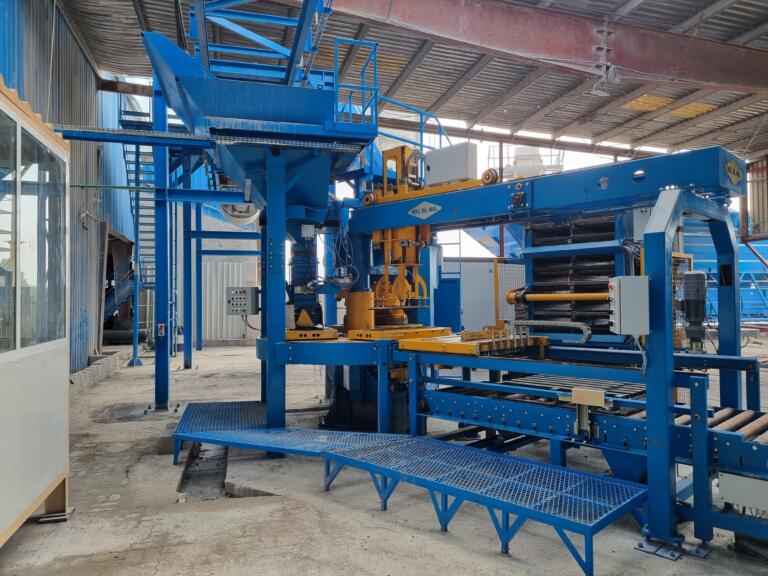
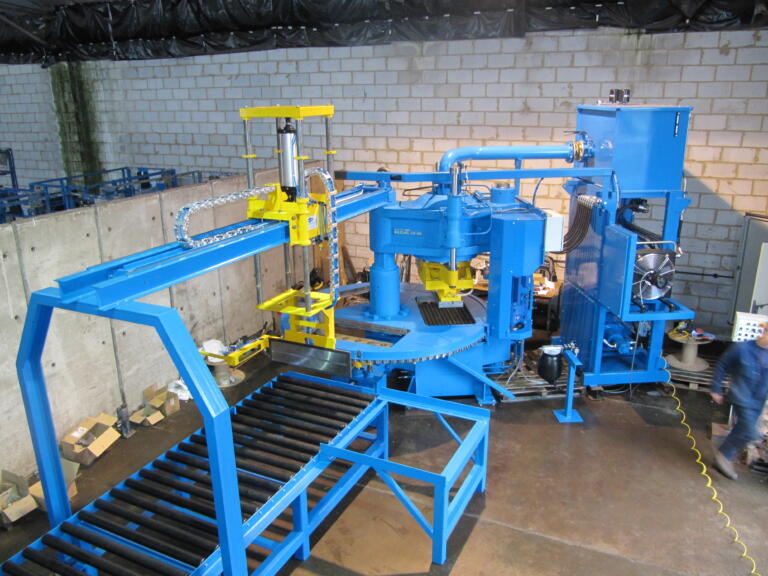
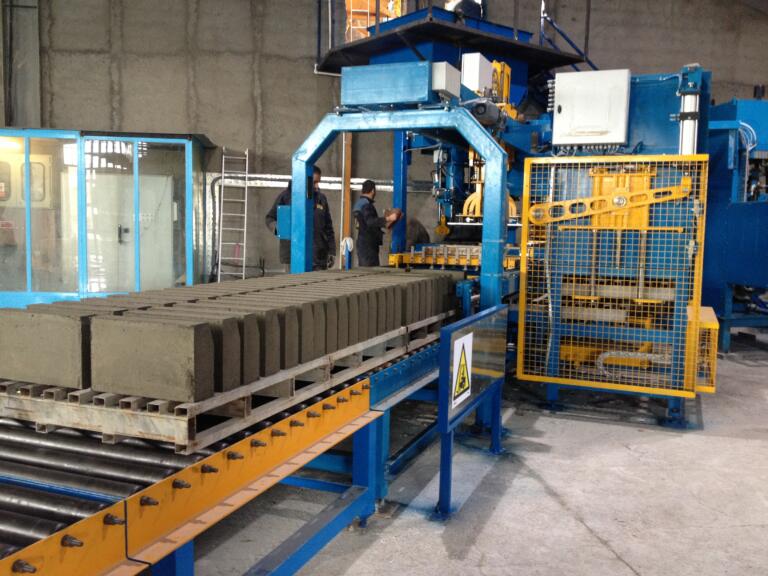
Modern wet press technology relies on advanced control and monitoring systems to maintain timing accuracy throughout the production cycle.
PLC based control systems govern the sequence and timing of machine functions. Sensors and automated feedback systems provide real time information on position, pressure, vacuum, and cycle status, allowing the process to remain stable and repeatable. A well designed hydraulic pressing system also ensures that force is applied in a controlled and uniform manner. Where the press is part of a wider line, integrated plant automation helps keep the entire production process in sync.
Accurate timing in wet press machines has a major effect on overall manufacturing performance. When each process stage operates within defined time parameters, manufacturers can:
This is especially important for operations running wet press concrete machines at scale, where small timing errors can quickly translate into lost output, quality drift, and higher production cost.
Even with advanced systems, maintaining precise timing in wet press production can be challenging. Variations in material flow, changes in moisture content, hydraulic lag, and normal machine wear can all reduce process consistency over time.
In older systems, outdated controls and limited automation can make timing performance more difficult to maintain. In such cases, improving controls, upgrading sensors, and restoring hydraulic performance can have a significant impact on the stability of a concrete wet press machine.
Maintaining consistent timing in wet press systems for concrete requires a disciplined and well monitored process approach.
Regular calibration of the wet press machine helps ensure that movement, sequencing, and cycle timing remain accurate. Proper maintenance of the hydraulic system supports stable pressure behaviour and repeatable press performance. The use of advanced automation and monitoring equipment can further improve control over critical variables such as temperature, humidity, material consistency, and cycle response.
Manufacturers should also review production data routinely to identify timing drift, diagnose emerging issues, and refine performance. This supports more stable production cycles and more repeatable product quality over time.
Precision timing is a critical factor in both product quality and operational efficiency in wet press production. Whether operating a wet press paver machine, a wet press concrete machine, or a fully integrated wet press system for concrete, synchronised process control is essential to achieving consistent results.
For any wet press machine manufacturer, maintaining accurate timing control throughout the production cycle is central to delivering reliable, high performance equipment. When combined with robust wet press technology and effective system optimisation, proper timing enables the production of high quality concrete products with improved surface finish, durability, and long term consistency.
When all stages of a wet press machine operate in the correct sequence and for the correct duration, manufacturers achieve better product consistency, improved quality, and fewer production issues.
Timing controls how and when pressure is applied within the hydraulic pressing system, which directly affects compaction, density, strength, and surface finish.
Modern industrial wet press machines use PLC controls, sensors, feedback systems, and automation equipment to maintain accurate timing throughout the cycle.
If timing is poorly controlled in a concrete wet press machine, product dimensions may vary, surface finish may become inconsistent and reject rates may increase.
Yes. Automation makes timing control in modern wet press machines far more accurate and repeatable, helping manufacturers maintain stable production cycles and consistent product quality.”
Want to Transform your Concrete production needs ?

Columbia Wil El Mil Engineering Ltd
7 Ashville Road, Gloucester
GL2 5EU, England
Tel: +44 (0)1452 525259
Email-Id: [email protected]
©2025, Columbia Wil El Mil. All Rights Reserved by Columbia.