
The press cycle is a critical factor in modern concrete manufacturing and has a direct influence on final product quality. Whether producing pavers, blocks, or architectural elements, consistency in each press cycle affects appearance, strength, dimensional accuracy, and long term durability.
A press cycle consists of a sequence of mechanical and material dependent actions that must operate together within defined limits. When these actions vary from cycle to cycle, manufacturers experience defects, higher rejection rates, and inconsistent performance in service. Maintaining a stable and repeatable press cycle is therefore essential when operating wet press concrete machines or single station hydraulic wet press systems, where each cycle directly determines product quality.
In concrete manufacturing, a typical press cycle includes filling material into the mould, pressing and compaction, demoulding, and transfer to curing. Each stage must be carried out within controlled parameters to ensure consistent results.
In wet press single station systems, concrete with higher moisture content is compacted under high hydraulic pressure, producing superior surface finish and dimensional precision. Dry cast systems rely primarily on vibration with low moisture mixes and are therefore less sensitive to pressure consistency but more dependent on vibration control.
Wet press systems are particularly sensitive to press cycle variation, as small differences in applied pressure, dwell time, or moisture content can significantly affect density and surface quality.
Key parameters that influence press cycle consistency include applied pressure, dwell time, vibration intensity where applicable, moisture content of the mix, and uniformity of material feed.
Accurate control of these parameters distinguishes basic press equipment from high accuracy wet press machines designed for precision wet pressing.
Inconsistent press cycles lead to a range of quality issues, including density variation between products, weak edges and thin sections, surface defects such as cracks or blemishes, dimensional inaccuracies that affect installation, increased rejection and rework rates, and reduced product durability.
These issues are particularly costly in wet press concrete block production, where tight tolerances and visual quality are essential.
Consistent compaction promotes even material distribution and results in high density concrete with reduced internal voids and porosity. This improves load bearing capacity and overall structural performance.
Stable press cycles eliminate surface defects caused by uneven pressure or vibration, producing smooth and uniform finishes suitable for architectural and premium applications.

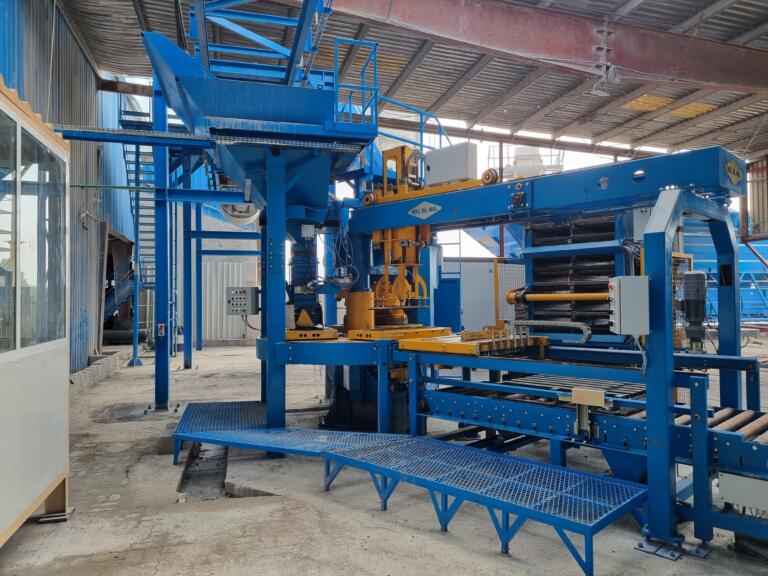
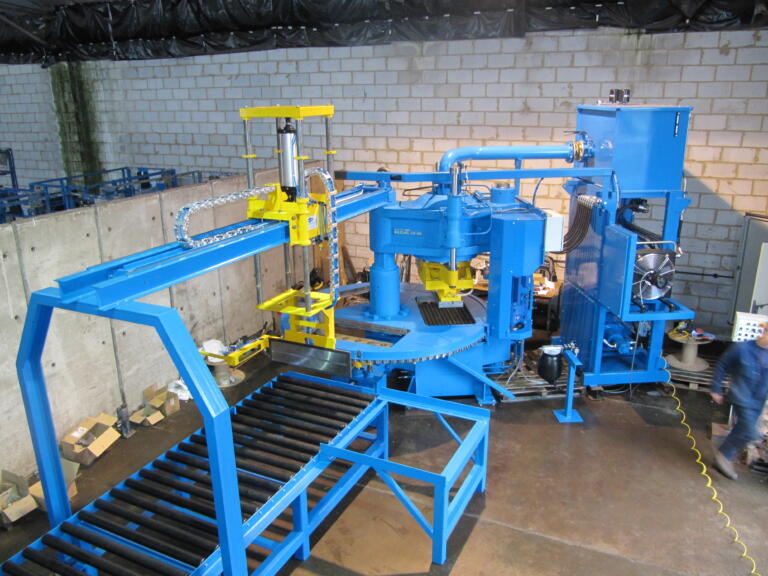
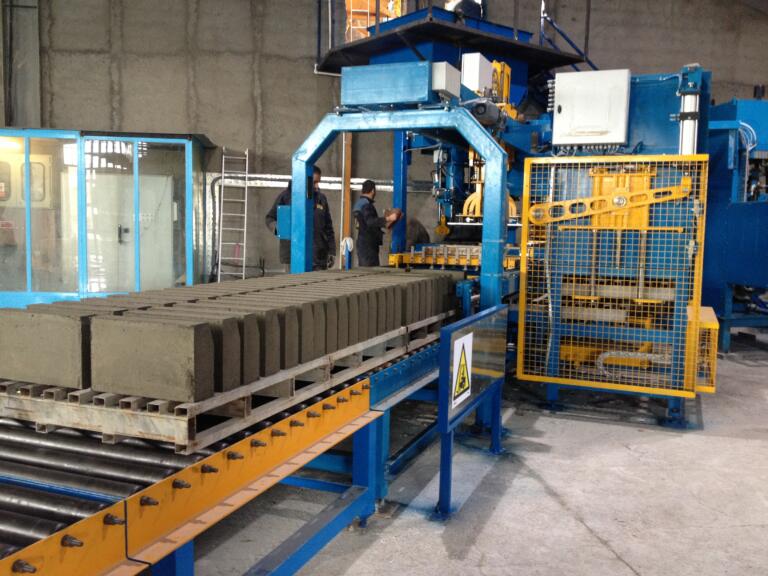
Consistency in press timing and pressure ensures accurate mould filling and uniform shrinkage. This improves product fit during installation, particularly for modular paving and block systems.
Uniform compaction reduces weak zones within the concrete, increasing compressive strength and reducing the risk of long term structural degradation.
Repeatable press cycles produce consistent quality results. Fewer defective units imply less material waste, less rework, and lower total production costs, particularly in automated operations.
Modern concrete plants employ advanced technologies to maintain press cycle consistency, including servo controlled press drives, automated feed and moisture control systems, real time pressure and vibration monitoring, intelligent PLC based recipe control, and sensor driven diagnostics with predictive maintenance capability.
These technologies are typically integrated into automated single station wet press systems to ensure precise control during every cycle.
Automation significantly reduces variability introduced by manual operation. Automated systems minimise human error in press timing and operation, adjust parameters automatically to compensate for material variation, and record process data for quality tracking and continuous optimisation.
This level of control is essential in high output wet press production environments.
Consistent press cycles deliver measurable benefits for producers, including improved product performance, higher customer satisfaction, stronger brand credibility based on consistent quality, reduced operational and material costs, and easier compliance with quality and performance standards.
Consistency in the press cycle is a fundamental driver of concrete quality. Uniform density, improved surface finish, dimensional accuracy, and long term durability all depend on reliable and repeatable press parameters.
As press cycle control continues to advance through intelligent automation, data driven control, and predictive monitoring, wet press technology will deliver even higher levels of precision, productivity, and product quality.
Consistency ensures uniform density, strength, and surface quality across all products.
Inconsistent press cycles cause uneven compaction, weak zones, and reduced compressive strength.
Uniform pressure ensures even material distribution and minimises internal defects.
Incorrect press timing can lead to over compaction or under compaction, affecting strength and dimensions.
Irregular vibration or dwell time often causes surface defects and inconsistent texture.
Consistent cycles reduce rejection rates by delivering predictable quality and minimising defects.
Servo drives, PLC systems, real time sensors, and automated moisture control support press cycle consistency.
Automation reduces human error by standardising operations and adjusting parameters based on live data.
Consistent pressing improves dimensional accuracy and installation fit.
Stable press cycles reduce porosity and internal voids, improving durability and resistance to environmental exposure.
Want to Transform your Concrete production needs ?

Columbia Wil El Mil Engineering Ltd
7 Ashville Road, Gloucester
GL2 5EU, England
Tel: +44 (0)1452 525259
Email-Id: [email protected]
©2025, Columbia Wil El Mil. All Rights Reserved by Columbia.